What "Price Per Acre" Actually Hides in the Snohomish Land Market
August 13, 2026
August 13, 2026
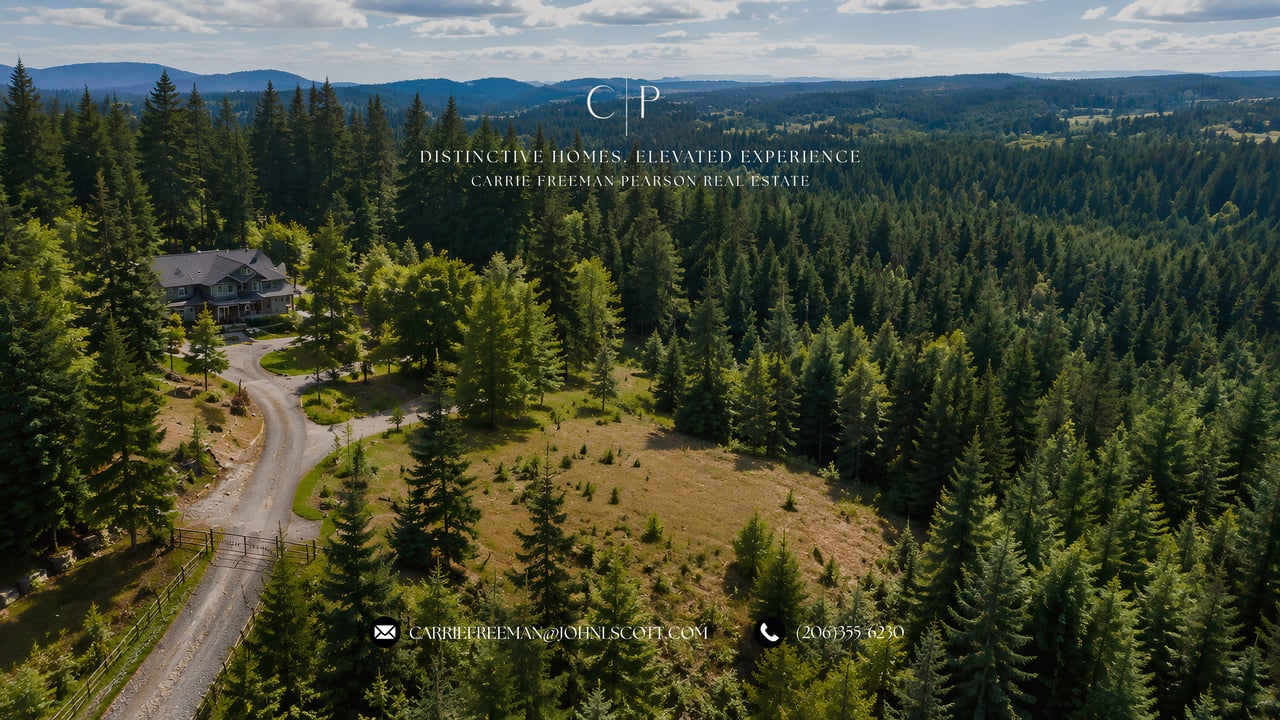
Two parcels near Three Lakes turned up in the same search this summer. Both sit within a few miles of downtown Snohomish. Both get described as private, wooded, and close to town. One is ten acres with a well already installed and a four-bedroom septic design already approved. The other is 2.3 acres with a creek on site and a note buried in the listing that the property will need a Reasonable Use Exemption before anyone can build on it at all.
A buyer comparing these on price per acre alone would be comparing two different products wearing the same label.
That is the trap in how "acreage near Snohomish" gets priced online. The number looks like a market. It is actually an average of two markets that behave nothing alike, and the difference between them rarely shows up until a buyer is already three weeks into due diligence.
Pull price-per-acre data for Snohomish County land as of early August 2026 and you get figures that are not in the same neighborhood depending on where you look. One land marketplace's county-level dataset, built from larger parcels, puts the median price per acre at $98,540, based on an average lot size of 23 acres and an average listing price of $1,631,440. A separate land search platform, pulling from four currently active countywide listings totaling 316 acres combined, puts the average cost per acre at $23,197, against an average listing price of $1,829,750.
Look at what happened there. The average dollar amount a buyer would pay is nearly identical between the two sources, somewhere around $1.6 to $1.8 million. But the price per acre differs by more than four times, because the two datasets are built from parcels of very different scale even though the total transaction size lands in the same range.
Land marketplace county dataset | Active countywide listings | |
|---|---|---|
Typical parcel size sampled | About 23 acres, on average | 316 acres combined across 4 listings |
Average listing price | $1,631,440 | $1,829,750 |
Implied price per acre | $98,540 (median) | $23,197 (average) |
Neither number is wrong. Both are accurate descriptions of whatever basket of listings they happened to sample that week. Neither one tells a buyer what a specific five-acre parcel near Snohomish is actually worth, because that depends on something the per-acre average can never capture: whether the acre in question is one you can legally build on.
Snohomish County land breaks into two rough categories that get lumped together under the word "acreage."
The first is small, buildable, lifestyle-oriented parcels, typically in the two to ten acre range, sitting close enough to town to matter for commute and services. These show up under names like Three Lakes, Machias, and Machias Ridge Estates, all inside or bordering the Snohomish area. One 4.59-acre listing off Newberg Road, marketed as sitting in Snohomish near Machias and Lake Stevens, advertised power and a well already in place, seven miles from the Lake Stevens Costco. That is the profile that earns a premium price per acre: infrastructure already resolved, distance to town already short.
The second category is large raw acreage, often held for timber or long-term appreciation, where the per-acre cost drops because the land carries none of that infrastructure yet. A 267-acre timberland holding zoned Forestry, located elsewhere in the county near Arlington, is a good illustration of the other end of the spectrum. It can look like extraordinary value on a price-per-acre basis, and often is, if what a buyer actually wants is raw land. It is a different purchase entirely from a five-acre homesite meant for a house next year.
The category in between, roughly ten to twenty acres, is where the two markets blur and where buyers get into trouble comparing listings side by side. A nearly 14-acre parcel inside Snohomish's own urban growth boundary, in the process of being annexed into the city itself, is not the same purchase as a 20-acre holding out in Machias made up of four separate lots where, according to the listing, road access still needs to be established heading north before the parcels can be reached by vehicle at all. Same county, same rough acreage bracket, and one of them changes jurisdiction under the buyer before closing even happens.
None of this shows up as a line item on a listing sheet. It shows up as friction during due diligence, and it comes down to three things a county reviewer has to sign off on before a raw parcel becomes a home site.
One listing near Three Lakes put the access gap in blunt terms:
"This property will require a Reasonable Use Exemption to build, and it IS possible to build on this land."
That single line is doing more work than the acreage figure next to it. It tells a buyer this parcel sits inside a critical area buffer wide enough that the county's default rules would not allow construction, and that the path forward runs through an exemption process rather than a standard permit. It is still buildable. It is not buildable the same way, on the same timeline, as a parcel with an approved septic design already sitting in the file.
If you are comparing acreage near Snohomish, the price per acre tells you almost nothing until you know which basket the parcel comes from. Two questions do more work than any average:
Is there a current, unexpired septic or sewer approval on file, and is there a well already producing, or does that work still need to happen? A 1998 approval with a permit that expired in 2001 is not the same as a design that is still active today.
Is legal access to the parcel already established and recorded, or does the listing language hint at an access easement that still needs to be created? "Road will need to be established" is a sentence worth stopping on.
This is exactly the kind of comparison that benefits from someone who has actually walked a construction and development project through Snohomish County's process. Jeff Pearson's background in new construction and land development gives our team a practical read on which critical area triggers matter, what a Reasonable Use Exemption actually costs in time, and where a septic or access gap is a minor fix versus a deal-changer.
Does more acreage always mean a lower price per acre? Generally yes, and that is exactly why a raw price-per-acre comparison misleads. A dataset built from large parcels and one built from a handful of much bigger active listings can show the same total transaction size and still land on price-per-acre figures four times apart, because the smaller parcel usually carries infrastructure the larger one does not.
What is a Reasonable Use Exemption? It is a process Snohomish County allows when critical area buffers would otherwise prevent any reasonable use of a parcel. It does not guarantee approval on your terms, and it adds time to a purchase timeline that a buildable, unencumbered lot would not need.
Can I get a standard mortgage on acreage? Conventional financing generally works for residential acreage up to around ten acres if the primary use is a home. Larger parcels, or ones with agricultural structures, more often require a portfolio loan or a USDA farm loan instead, which changes both your lender options and your timeline.
If you are looking at acreage near Snohomish and the listings you are comparing do not seem to add up, that is usually because they are not the same kind of parcel underneath the acreage figure. Carrie Freeman and the team can walk through the access, septic, and critical area status on a specific property before you write an offer. Schedule a Strategy Call to talk through what a parcel actually is before you decide what it is worth.
Real Estate Insights

Home Buying

Real Estate Insights

Real estate is built on trust and it is more than buying and selling homes, it's about having an experienced professional in your corner who can anticipate challenges, solve problems, and guide you with confidence. With over 23 years of experience, extensive market knowledge, expert negotiation skills and a genuine commitment to her clients, Carrie is known for working tirelessly to make the process as smooth and successful as possible. Whether you're buying, selling, investing, or simply exploring your options in Snohomish County, King County or the Greater Seattle Area, Carrie is dedicated to protecting your interests, providing honest advice, and delivering results every step of the way.
Carrie Freeman Pearson
108 UNION AVE SNOHOMISH, WA 98290